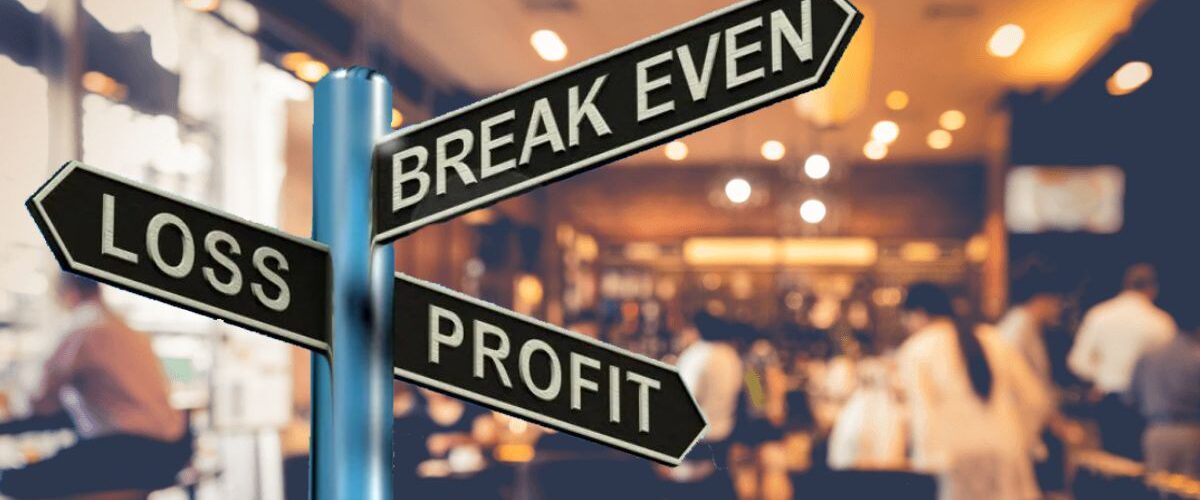
The break-even point is the level of sales at which a restaurant covers all of its expenses and starts making a profit. In other words, it’s the point at which a restaurant is neither making money nor losing money. Knowing your restaurant’s break-even point is essential for making smart business decisions and ensuring long-term profitability. It is not always easy to determine the breakeven point in a restaurant and we are ready to help you in this. The calculation of the break-even point for the existing restaurant is a part of the Restaurant analysis service provided by our company.
Why is Knowing Your Break-Even Point Important?
Knowing your restaurant’s break-even point is crucial for several reasons. First, it helps you set realistic goals for your business. If you know how much you need to sell each month just to break even, you can set sales targets that are achievable and realistic.
Break-even analysis is a financial calculation that helps businesses determine the point at which their total revenue equals total expenses. Once this point is reached, the business has broken even and any sales beyond this point result in profit.
For restaurants, break-even analysis can help owners determine the optimal pricing strategy for their menu items. By calculating the costs of ingredients, labor, rent, and other expenses, restaurant owners can set prices that not only cover their costs but also generate profit.
Break-even analysis can also help businesses make informed decisions about expansion or investment opportunities. By understanding their break-even point, businesses can estimate the minimum amount of revenue needed to justify new investments or expansions.
Another benefit of break-even analysis is that it helps businesses understand their cash flow needs. By knowing the point at which they will break even, businesses can plan their cash flow accordingly and ensure they have enough funds to cover their expenses until they reach profitability.
Overall, break-even analysis is an essential tool for any business looking to make informed financial decisions. By understanding their costs, sales, and break-even point, businesses can maximize their profits and achieve long-term success.
Finally, knowing your break-even point allows you to identify areas where you can cut costs. By analyzing your expenses, you can determine which costs are eating into your profits and find ways to reduce them without sacrificing quality.
Calculating Your Restaurant’s Break-Even Point
To calculate your restaurant’s break-even point, you need to know two things: your fixed costs and your variable costs. Fixed costs are expenses that stay the same no matter how much you sell, such as rent and insurance. Variable costs are expenses that vary based on how much you sell, such as ingredients and labor.
Once you have determined your fixed and variable costs, you can use the following formula to calculate your restaurant’s break-even point:
Break-Even Point = Fixed Costs ÷ (1 – Variable Costs ÷ Sales)
In order to calculate your break even point costs, follow these simple steps:
- Identify your fixed costs:
- Rent/mortgage payments
- Utility bills
- Taxes and insurance
- Equipment leases or loans
- Calculate your variable costs:
- Cost of ingredients and supplies
- Labor costs
- Marketing and advertising expenses
- Maintenance and repairs
- Add up your fixed and variable costs to determine your total expenses.
- Determine your average check size:
- Add up the total sales for a given period (e.g. a week or month)
- Divide that amount by the number of customers served during that period
- Calculate your break even point:
- Divide your total expenses by your average check size
You may need to adjust your menu prices or find ways to reduce your expenses in order to reach your break even point and start turning a profit. It is important to regularly revisit your break even point calculation as your expenses and sales fluctuate over time.
Understanding the Importance of Fixed Costs for Restaurants
Whether you’re a seasoned restaurateur or a newbie in the industry, understanding the different costs that come with running your establishment is critical to your success. One key aspect of restaurant costs to consider are fixed costs.
What are Fixed Costs?
Fixed costs are expenses that do not change regardless of how much your restaurant sells. These costs are usually regular and predictable, making them essential to factor into your budget planning as they must be paid whether your restaurant is busy or quiet. Examples of fixed costs include rent, insurance, licensing fees, property taxes, and salaries of full-time employees.
While it may be tempting to cut corners and reduce your fixed costs, keep in mind that these expenses are necessary investments to keep your restaurant operating smoothly. Failure to pay these expenses can result in legal trouble, loss of licenses, and ultimately, the closure of your business.
The Impact of Fixed Costs on Your Restaurant’s Sales
Fixed costs play an important role in determining your restaurant’s profitability. Since these expenses remain constant, they can have a significant impact on your bottom line. For instance, if you have high fixed costs, you’ll need to generate more sales to cover these expenses and make a profit. In contrast, low fixed costs mean that even moderate sales numbers can translate into significant profits.
If your restaurant’s sales are struggling, it’s essential to examine your fixed costs and determine if there are areas where you can reduce expenses without compromising the quality of your products and services. However, be careful not to cut too deep, as doing so can jeopardize your restaurant’s long-term viability.
Tips for Managing Fixed Costs
- Create a detailed budget plan that includes all of your fixed costs, along with your variable expenses.
- Regularly review your expenses to identify areas where you can cut back or reduce costs without affecting the quality of your services.
- Explore different options for purchasing supplies and equipment to lower your fixed costs.
- Consider outsourcing certain tasks, like accounting or marketing, to reduce your payroll expenses.
- Invest in technology solutions that can help automate processes and reduce labor costs over time.
Fixed costs are an essential component of running a successful restaurant business. While they may seem daunting, understanding and managing these expenses properly can help ensure your restaurant’s long-term viability. By creating a detailed budget, regularly reviewing your expenses, and exploring cost-cutting measures when necessary, you can keep your fixed costs under control and improve your restaurant’s profitability.
Understanding Variable Costs in the Restaurant Business
Running a restaurant business involves managing various costs, including fixed and variable costs.
What are Variable Costs?
Variable costs are expenses that vary depending on how much a restaurant sells. They are directly linked to the volume of food and beverages produced and sold. Examples of variable costs include:
- Food ingredients
- Beverages
- Packaging materials
- Cleaning supplies
- Staff wages
Variable costs are important because they affect a restaurant’s profit margins. Higher sales volume may lead to an increase in variable costs, which can reduce profitability. Understanding these costs is crucial for making informed decisions about pricing strategies, menu offerings, and inventory management.
Calculating Variable Costs
To calculate variable costs, restaurant owners need to determine the total cost of each ingredient or supply used in a given period.
It’s also essential to track variable costs over time and adjust prices accordingly. If the price of beef increases, for example, the variable cost per burger will rise, so the restaurant may need to raise its prices to maintain profitability.
Managing Variable Costs
There are several strategies that restaurants can use to manage variable costs:
- Menu analysis: Analyzing menu items and their associated costs can help restaurants identify profitable items and those that may be costing more than they are worth.
- Inventory management: Keeping track of inventory levels and ordering only what is needed can prevent waste and reduce costs.
- Pricing strategies: Adjusting prices based on ingredient costs and sales volume can help maintain profitability. Offering specials during slower times can also increase sales while using up excess inventory.
- Staff scheduling: Scheduling staff according to sales volume can help reduce labor costs during slower periods.
Variable costs play a crucial role in the success of a restaurant business. Understanding and managing these costs can help restaurant owners make informed decisions about pricing, menu offerings, and inventory management.
Conclusion
Break-even analysis is a powerful tool for restaurant owners to track their costs and sales and achieve profitability. By understanding your fixed and variable costs, sales prices, and break-even point, you can make informed decisions about running your business. Keep monitoring your performance and adapting to the changing market conditions to stay ahead of the competition.